

Gimbap - Meal Prep
Classic Korean School Lunchbox

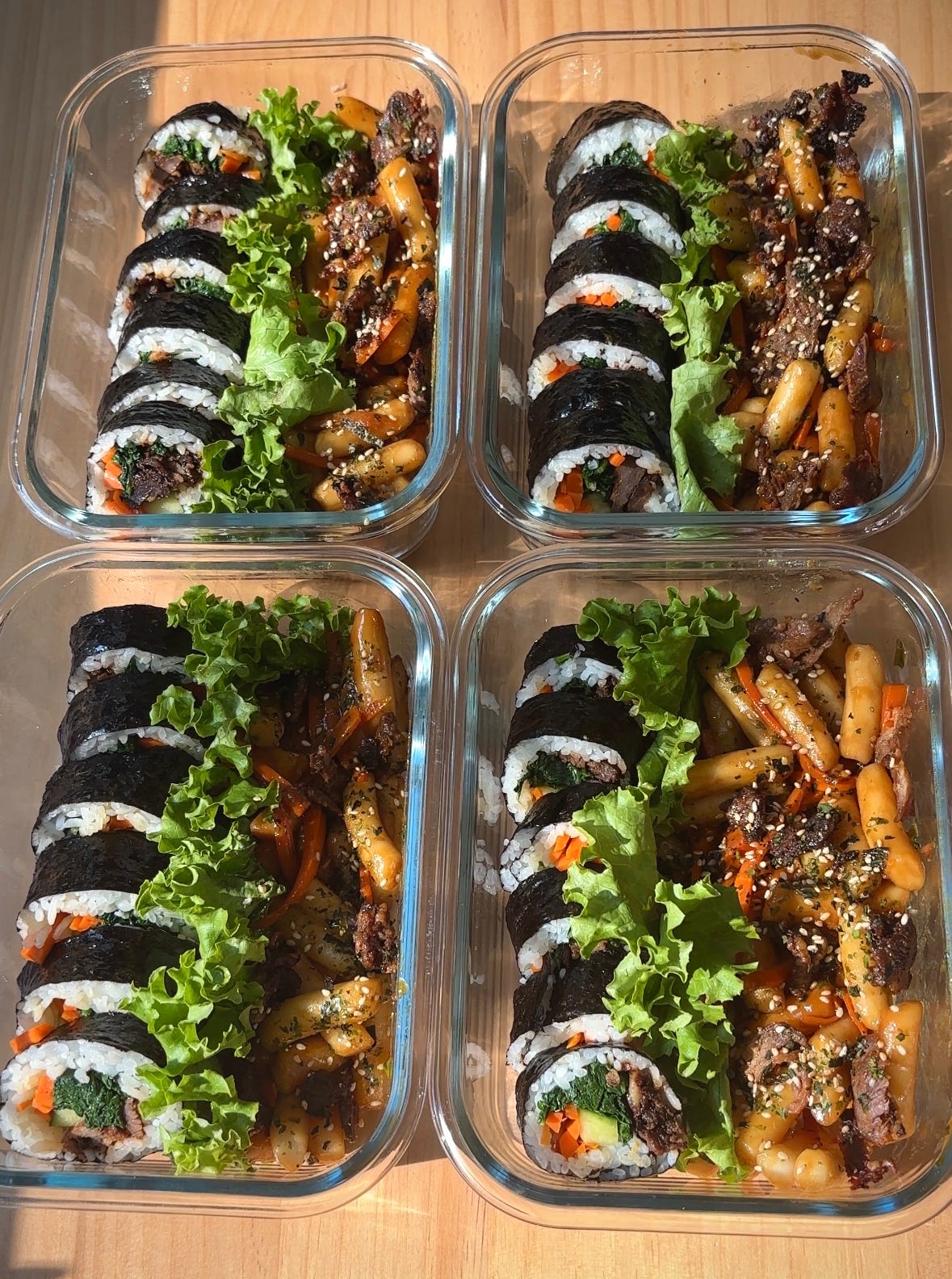
Fall is here, and school season is in full swing. So today, we are making a classic Korean school lunch box staple: Gimbap!
Gimbap is the Korean version of sushi, made with “gim” (seaweed) and “bap” (rice). You can use any protein you like – bulgogi, egg, or spam – and add vegies like carrots, kimchi, or spinach. Gimbap is so versatile, delicious, and perfect for meal prep since it keeps well in the fridge or freezer for a few days.
This recipe is nostalgic because my grandma used to make it for me for lunch. I would fan out the rice while she rolled the gimbap, and she’d feed me pieces as she cut them up. It’s one of those comfort foods that takes me back to my childhood. This recipes serves about 3-4 and makes about 5 rolls. I paired the gimbap with stir-fry tteokbokki, and you can find the recipe here.
The best thing of gimbap is that you can prepare all the fillings in advance and roll the gimbap the day before or make it the day of if you want to eat it fresh. You can store the rolls for 2-3 days days, but after that, the rice can get a bit hard.
There are a few different components to this recipe, but don’t worry! Each step only takes about 10 minutes to prepare. Let’s start rolling!
Preparation: Prepare all the ingredients beforehand and set them in an assembly line. This makes the rolling process much smoother and more organized.
Rolling the Gimbap: Use a bamboo mat (makisu) to roll the gimbap tightly. If you don't have one, you can just use your hands.
Cutting Gimbap: Dip your knife in water or lightly oil it before cutting the gimbap. This prevents the rice from sticking to the knife and helps you get clean cuts.
Rice Ratio: Aim for a thin layer of rice on the seaweed sheet. Too much rice can make the roll bulky and harder to handle.
Filling Variation: Feel free to mix and match the fillings. Gimbap is very versatile, so you can use whatever leftovers or veggies you have on hand. Try adding cheese, pickled radish (danmuji), crab sticks, or tofu for different flavors.
Sesame Oil & Seeds: Brush a light layer of sesame oil on the finished rolls for a shiny appearance and extra flavor. Sprinkle sesame seeds for added texture and taste.
Gimbap Falls Apart: This could be due to not rolling tightly enough or overstuffing the roll. Practice makes perfect—try smaller amounts of filling and roll firmly.
Rice Sticking to Hands: Keep a bowl of water mixed with a bit of vinegar nearby and dip your hands before handling the rice to prevent it from sticking.
Vegetarian Option: Replace bulgogi with tofu, mushrooms, or just add more vegetables like bell peppers or avocado.
Spicy Variation: Add a smear of gochujang inside the roll for a spicy kick.
Storage
Storing Gimbap: Gimbap can be stored in an airtight container in the fridge for up to 2-3 days. However, the rice may harden a bit. To soften it, wrap the roll in a damp paper towel and microwave for about 15-20 seconds.
Freezing Gimbap: If you plan to freeze gimbap, wrap each roll tightly in plastic wrap and place them in a freezer-safe bag. To reheat, thaw them in the fridge and microwave briefly, or enjoy them cold.


Bulgogi Marinade
1½ lbs boneless ribeye steak
1 small pear, peeled and grated
¼ cup soy sauce
2 Tbsp brown sugar
2 Tbsp toasted sesame oil
4 cloves garlic, minced
1 Tbsp grated ginger (about 1½ inches)
1 Tbsp gochujang
3 stalks green onions, chopped
¼ yellow onion, grated
⅛ tsp ground black pepper
1 Tbsp toasted sesame seeds
Bulgogi Instructions
Prep the meat: Wrap the steak in plastic wrap and place it in the freezer for 30 minutes to 1 hour (optional). This makes slicing easier. Unwrap and slice across the grain into ¼-inch thick slices.
Make the marinade: In a medium bowl, combine the grated pear, grated onion, soy sauce, brown sugar, sesame oil, garlic, ginger, gochujang, green onions, black pepper, and sesame seeds.
Marinate: In a gallon-size Ziploc bag, combine the bulgogi marinade and steak slices. Marinate for at least 2 hours or overnight in the fridge.
Cook the bulgogi: Heat 1 Tbsp of vegetable oil in a cast-iron pan over medium-high heat. Add the steak in a single layer, flipping occasionally, until charred and cooked through (2-3 minutes per side).
Set aside: Place the cooked bulgogi on a plate and set it aside.
Rice Instructions
Season the rice: Place the cooked rice in a large bowl. Mix it with ½ tsp salt, 2 tsp sesame oil, 2 tsp rice vinegar, and 1 tsp sugar.
Cool the rice: Let it cool, either by fanning or setting it aside.
Spinach Instructions
Blanch the spinach: Boil a quart of water in a large pot. Add the spinach and cook for 1-2 minutes. Drain and squeeze out excess water.
Season the spinach: In a bowl, mix the blanched spinach with 3 minced garlic cloves, ½ tsp salt, and 2 tsp toasted sesame oil. Set aside.
Carrot Instructions
Prep the carrots: Cut the carrots into matchsticks and combine with ¼ tsp salt. Let them sweat for about 5 minutes.
Cook the carrots: Heat a pan over medium heat and add 1 tsp sesame oil. Sauté the carrots for about 1 minute, then set aside.
Egg Instructions (Optional)
Make the egg sheet: Beat 2 eggs with a pinch of salt. Heat a nonstick pan over medium heat with a few drops of oil. Turn the heat to low and pour the egg mixture into the pan, spreading it into a large circle like a crepe.
Cook the eggs: When the bottom is cooked, flip it over and let it finish cooking. Remove from heat and let it cool, then cut into 1-inch wide strips.
Cucumber Instructions
Prep the cucumbers: Cut cucumbers into matchsticks and sprinkle with salt to draw out excess moisture. Let them rest for 5 minutes.
Rinse & dry: Rinse the salt off the cucumbers and pat them dry. Drizzle with sesame oil and set aside.
Assembling the Gimbap
Prep the seaweed: Place a sheet of gim on a flat surface with the shiny side down. Evenly spread about ½ cup of cooked rice, leaving about 1 inch uncovered on one side of the seaweed edge. (Tip: Keep a bowl of water nearby to wet your hands and prevent the rice from sticking.)
Add the fillings: Place bulgogi, spinach, carrots, egg strips (optional), and cucumber in the center of the rice.
Roll it up: Using both hands, roll the seaweed wrapper over the filling until the edge of the rice and gim reaches the opposite edge. Grab the roll with both hands and press it tightly as you continue to roll the gimbap. You can use a bamboo mat, but rolling by hand works just as well.
Seal and slice: Set the finished roll aside with the seam down to seal it. Repeat with the remaining ingredients. Brush each roll with toasted sesame oil and cut into ¼-½ inch bite-sized pieces with a sharp knife.
Store or serve: Place the rolls in an airtight container and store in the fridge for up to 2-3 days, or serve immediately.
Pair this with stir-fry tteokbokki, and you've got a classic Korean school lunchbox meal! Let me know if you make it!